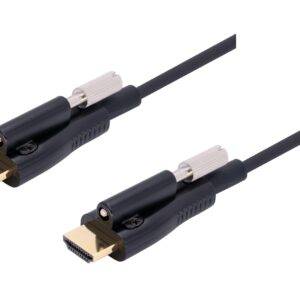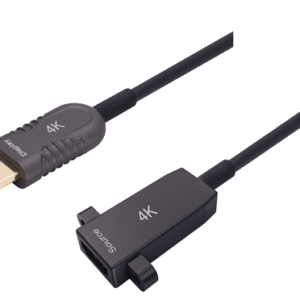

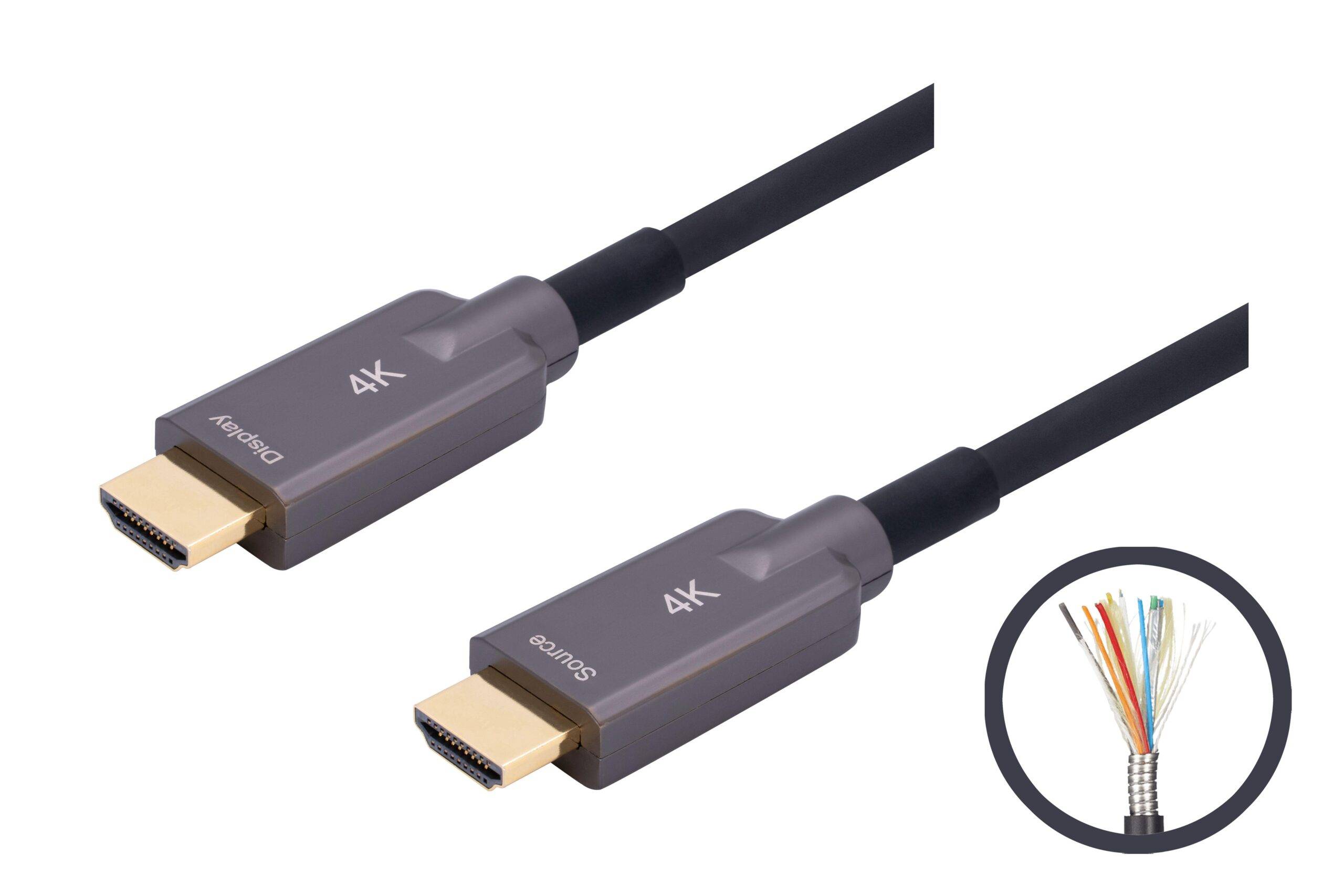
Armored HDMI 2.0 Type A to Type A 70m (230ft) Active Optical Cable, 4K@60Hz, 18Gbps, CE & FCC Compliant
Description
Armored HDMI 2.0 Active Optical Cable is engineered for reliable use in harsh and demanding environments.The stainless steel armored structure with reinforced elements provides excellent crush resistance, mechanical protection, and EMI immunity for long-distance HDMI transmission.Designed for medical, military, shipboard, staging, and industrial display applications, it delivers stable 18Gbps 4K@60Hz performance with a durable industrial-grade jacket.
• 18Gbps bandwidth, supports 4K@60Hz HDMI 2.0 transmission
• Hybrid fiber + copper for long-distance up to 100m (328ft)
• Steel armored structure for crush resistance and durability
• Industrial TPU jacket, waterproof and UV resistant
• Plug-and-play with low power and strong EMI immunity
Specifications
Features & Specs
Measurements
Item Details
User Guide
Frequently Asked Questions
If it is a passive armored HDMI cable, it is non-directional.rnIf it is an active optical or active copper armored HDMI cable, it is directional and must be connected according to the Source and Display markings.
This cable is ideal for:rnrnIndustrial automation systemsrnrnConference rooms & control roomsrnrnDigital signagernrnBroadcast and studio environmentsrnrnMedical imaging systemsrnrnLong-term fixed installations
Armored” refers to an extra tough outer layer (metal/TPU, steel tape etc.) that protects the internal fiber and copper from crushing, abrasion, bend stress, and harsh installation environments like walls, conduits, or industrial settings
Generally yes — it works with TVs, monitors, projectors, PCs, game consoles, STBs, etc. However, compatibility can vary if intermediary devices (switches, splitters) don’t supply enough power or proper HDCP/EDID communication. Testing with your exact setup before permanent installation is recommended.
Some real-world issues include:rnrnNot working with certain HDMI switches or splitters due to handshake/power issues.rnrnOlder devices with weak HDMI power output might not drive the active chip consistently.rnThese are not faults with the cable but are typical challenges when mixing active and passive HDMI equipment.